Leave Your Message
-
Phone
-
E-mail
-
Whatsapp

Choosing the right Red Rubber O Ring is not simply a matter of matching color and diameter. In real maintenance work, a seal can look perfect on the bench yet fail after hours of heat, pressure, or chemical exposure. The red color often identifies a product range, but it does not reliably reveal the rubber compound, hardness, or operating limits. Always confirm the manufacturer’s technical data.
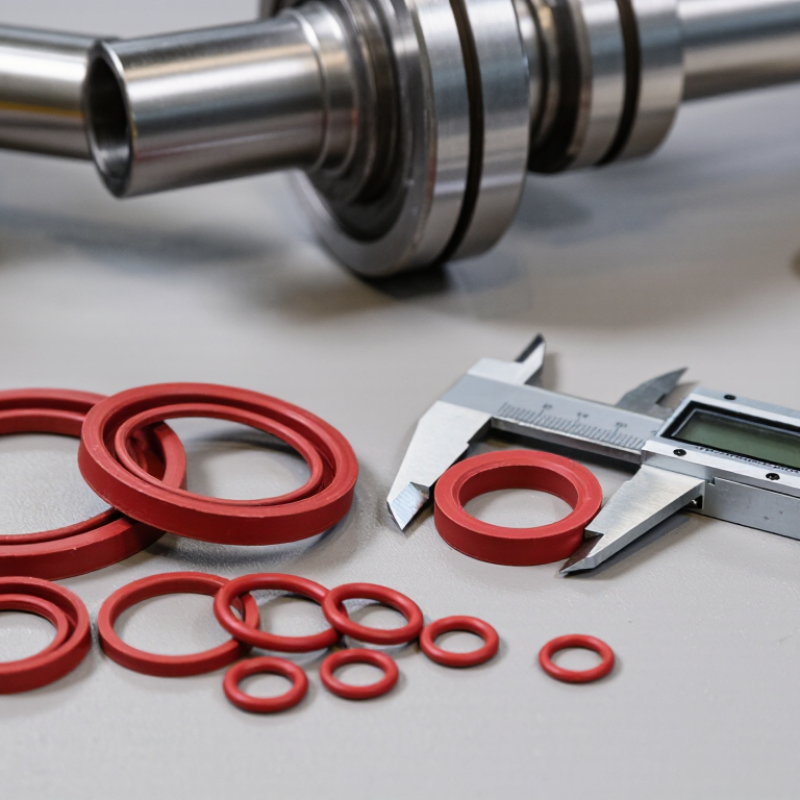
Start with the application. Measure the groove, shaft, and existing seal with clean calipers, rather than trusting an old O-ring that may have swollen or flattened. Check the working temperature, pressure, movement, and contact media. Water, mineral oil, steam, cleaning chemicals, and fuels can affect rubber very differently. A Red Rubber O Ring used in a static water connection may perform well, while the same seal may deteriorate quickly in petroleum-based fluid. Small details matter.
Material compatibility comes first.
Choose the correct cross-section and inside diameter. Then review hardness, compression, lubrication, and installation conditions. A seal that is too soft may extrude under pressure. One that is too hard may struggle with surface irregularities. I have seen premature failures caused by scratched grooves, dry assembly, and over-stretching, not defective rubber. That possibility deserves attention.
Reliable selection also requires traceable information, including compound specifications, temperature ratings, quality records, and relevant industry standards. When the application is safety-critical, consult a qualified sealing engineer and validate the choice through testing. Product descriptions can be incomplete. Even experienced buyers occasionally overlook pressure spikes or cleaning cycles. A careful selection process reduces leakage, downtime, and repeated replacement costs while giving the Red Rubber O Ring a realistic chance to perform as intended.
How to Choose the Right Red Rubber O Ring?
Red rubber O rings are valued for their flexibility, resilience, and practical sealing performance. They often work well in static applications involving air, water, and mild environmental exposure. Their bright color also makes them easier to spot during inspection. However, color does not identify the exact rubber compound. Always check the material specification.
In practical assembly, measure the groove and shaft before selecting the ring. A seal that looks slightly too thick may twist during installation. A loose ring may leak under pressure. Clean the groove carefully, then apply a compatible lubricant sparingly. Dirt, sharp edges, and excessive stretching can damage the sealing surface. Small details matter.
Temperature, pressure, and chemical contact must guide the final choice. Red rubber may perform poorly with petroleum oils, aggressive solvents, ozone, or high heat unless its compound is specifically rated for them. Review the supplier’s technical data, hardness, temperature range, and dimensional tolerance. Testing under real operating conditions is wise. I have seen an apparently suitable ring swell after brief chemical exposure. That mistake was avoidable. For repeated maintenance, record the operating temperature, fluid type, compression level, and inspection results. This creates reliable evidence for future selection, rather than relying on color or habit.
| Selection Dimension | Typical Property or Data | Advantages | Common Uses | Important Limitations |
|---|---|---|---|---|
| Material Identification | “Red rubber” is a color description rather than a universal material specification. The actual compound may be natural rubber, synthetic rubber, silicone, or another elastomer. | Color makes the seal easy to identify during installation, inspection, and maintenance. | Equipment maintenance, general-purpose sealing, color-coded spare-part systems, and visible static seals. | Never select an O ring by color alone. Confirm the material, hardness, temperature range, and chemical compatibility. |
| Natural Rubber Compound | Typical working temperature: approximately −50°C to +90°C, depending on formulation and service conditions. Excellent elasticity and tensile strength. | Very good resilience, flexibility, abrasion resistance, and sealing recovery under moderate conditions. | Water, air, dust, low-pressure hydraulic applications, vibration isolation, and general static sealing. | Generally unsuitable for petroleum oils, fuels, ozone, sunlight, and many aggressive chemicals. |
| EPDM Compound | Typical working temperature: approximately −50°C to +150°C. Strong resistance to hot water, steam, weathering, ozone, and many water-based fluids. | Long service life in outdoor and water-related environments; maintains flexibility over a wide temperature range. | Water systems, plumbing, heating equipment, brake fluids based on glycol, outdoor enclosures, and steam-related applications. | Usually incompatible with mineral oils, petroleum fuels, and hydrocarbon-based lubricants. |
| Silicone Compound | Typical working temperature: approximately −60°C to +200°C, with some specialized grades rated higher. Available in red and other colors. | Excellent low- and high-temperature flexibility, good weathering resistance, and good electrical insulation. | Food-contact equipment when an approved grade is used, medical devices, electronics, ovens, lighting equipment, and static seals. | Lower tear and abrasion resistance than many other elastomers; commonly unsuitable for dynamic, high-wear sealing and concentrated acids or alkalis. |
| Hardness Selection | Common O-ring hardness ranges are approximately 70 Shore A for general service, 80–90 Shore A for higher extrusion resistance, and 50–60 Shore A for lower sealing force. | Harder compounds resist extrusion and wear; softer compounds seal at lower compression and can accommodate minor surface irregularities. | Choose according to pressure, gland design, gap size, installation force, and whether the seal is static or dynamic. | Hardness cannot compensate for incorrect material compatibility, poor gland design, excessive clearance, or an unsuitable temperature range. |
| Temperature Requirement | Select a compound whose continuous service range covers the minimum and maximum operating temperatures, including start-up and cleaning cycles. | Correct temperature selection reduces hardening, softening, compression set, cracking, and leakage. | Engines, pumps, valves, hot-water systems, refrigeration equipment, and outdoor machinery. | Published temperature limits are typical values; pressure, chemical exposure, compression, and cycling can reduce actual service life. |
| Chemical Compatibility | Compatibility depends on both the elastomer and the fluid concentration, temperature, pressure, and exposure time. | Matching the compound to the media helps prevent swelling, shrinkage, cracking, softening, and loss of sealing force. | Hydraulic systems, pneumatic equipment, water treatment, fuel handling, chemical processing, and food-processing machinery. | Always check a material compatibility chart or conduct a product-specific test before using the seal with an unfamiliar fluid. |
| Static or Dynamic Service | Static seals remain in place, while dynamic seals move against a mating surface. Static applications generally allow a broader range of compounds and designs. | Static O rings are reliable when the gland, squeeze, and surface finish are correctly designed. | Flanges, covers, pipe fittings, valve bodies, connectors, and stationary housings. | For reciprocating or rotating motion, consider friction, lubrication, surface finish, extrusion risk, and a compound designed for dynamic service. |
| Size and Dimensional Fit | Choose the correct inside diameter and cross-section according to the applicable standard or the equipment manufacturer’s groove dimensions. | Correct sizing provides the required squeeze without excessive stretching, twisting, or installation stress. | Replacement seals for pumps, cylinders, manifolds, fittings, and custom-machined housings. | An O ring that is too small, too large, over-stretched, or incorrectly compressed may leak even when the material is suitable. |
| Pressure and Extrusion Resistance | Higher pressure and larger gland clearances increase the risk of extrusion. Harder compounds, backup rings, and reduced clearances may be required. | Proper design helps maintain sealing performance under pressure fluctuations and mechanical loading. | Hydraulic cylinders, pressure valves, pumps, compressors, and high-pressure fluid systems. | Pressure capability is not determined by material hardness alone; groove geometry, clearance, temperature, lubrication, and fluid type are also critical. |
| Surface Finish and Lubrication | Sealing surfaces should be smooth, clean, and free from scratches, burrs, and sharp edges. Use a lubricant compatible with both the O ring and the sealed media. | Proper installation reduces twisting, cutting, friction, and premature wear. | Assembly of valves, fittings, cylinders, pumps, and removable covers. | Petroleum-based lubricants can damage some rubber compounds, including many EPDM seals. Avoid using incompatible grease or excessive lubricant. |
| Quality and Compliance | For regulated applications, verify relevant requirements such as food-contact, drinking-water, medical, electrical, or fire-resistance approvals. | Documented material traceability and testing support consistent performance and regulatory compliance. | Food processing, pharmaceutical equipment, potable-water systems, medical equipment, and aerospace-related applications. | Approval status applies to a specific compound and use condition; it should not be assumed for every red-colored O ring. |
Selection rule: Choose a red O ring by verified elastomer, operating temperature, chemical exposure, hardness, pressure, motion, and groove dimensions—not by color alone. The stated temperature ranges are typical guidelines and should be confirmed against the compound specification and actual service conditions.