10 Essential Tips for Choosing Molded Gaskets Effectively?
Selecting the right molded gaskets is a crucial decision in various industries. These components play a vital role in ensuring the integrity of seals in mechanical systems. However, the process can often be overwhelming. With countless options available, how can one make the right choice?
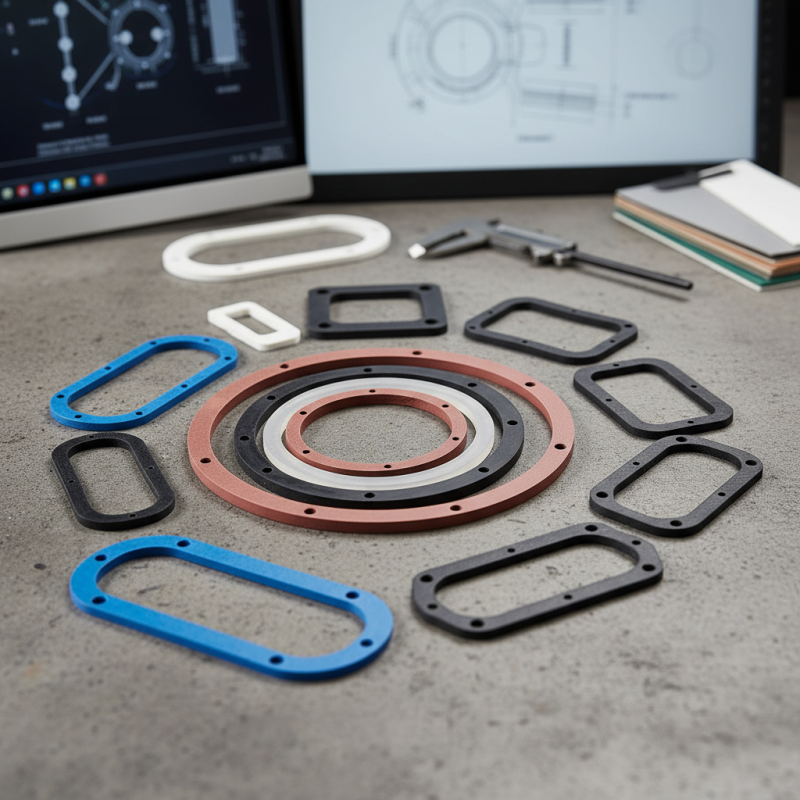
Molded gaskets come in various shapes and materials. Finding the perfect fit for your application requires understanding specific requirements. You must consider factors like temperature, pressure, and chemical compatibility. It's not just about aesthetics or cost; functionality matters significantly.
Moreover, knowledge and expertise are key. Many decisions can appear straightforward but may lead to costly mistakes. Reflecting on past selections can provide valuable insights. Rely on reliable sources and trusted manufacturers for guidance. Ultimately, the goal is to choose molded gaskets that enhance performance and safety.
Understanding the Importance of Molded Gaskets in Sealing Solutions
Molded gaskets play a crucial role in sealing solutions across various industries. These components ensure leak-free connections, which are vital for operational efficiency. Proper sealing can significantly reduce downtime and maintenance costs. The global gasket market is projected to exceed $15 billion by 2025, indicating the growing reliance on effective sealing technologies.
When selecting molded gaskets, it's important to consider material compatibility. Different environments may expose gaskets to heat, chemicals, or moisture. For instance, rubber gaskets may degrade when exposed to certain oils, whereas silicone can resist high temperatures. A report from the International Sealing Association indicates that nearly 30% of failures in industrial applications stem from inadequate gasket selection.
Additionally, the precision of molded gaskets affects performance. The sealing surface must be flawless to prevent leaks. This need for precision also creates challenges, as manufacturing inconsistencies can lead to unsuitable products. According to industry data, up to 20% of gaskets may not meet specifications when sourced improperly. Investing in reliable vendors and conducting rigorous testing can help mitigate these risks and ensure effective sealing solutions.
10 Essential Tips for Choosing Molded Gaskets Effectively
| Tip |
Description |
Material |
Application |
| 1. Consider the Material |
Select a gasket material suitable for the application’s temperature and chemical exposure. |
Silicone, EPDM, PTFE |
Automotive, HVAC |
| 2. Assess the Pressure Ratings |
Know the pressure limits of the gasket to ensure a proper seal under operational conditions. |
Nitrile, Neoprene |
Piping, Flange Gaskets |
| 3. Analyze the Fluid Compatibility |
Ensure the gasket material is compatible with the fluid being contained to prevent degradation. |
Viton, Rubber |
Chemical Processing, Oil & Gas |
| 4. Evaluate the Temperature Range |
Select a gasket that can withstand the operational temperature without losing its sealing properties. |
Compressed Fiber, PTFE |
High-Temperature Applications |
| 5. Check the Hardness Level |
The hardness of a gasket affects its ability to compress and deform to create a seal. |
Shore A, D Hardness |
General Sealing |
| 6. Consider Environmental Factors |
Account for factors like humidity, temperature fluctuations, and exposure to UV light. |
EPDM, Silicone |
Outdoor Equipment |
| 7. Evaluate the Manufacturing Process |
Consider the manufacturing methods used; compression vs. injection molding can affect quality and cost. |
Molded, Cut |
Custom Gaskets |
| 8. Review Installation Requirements |
Know the installation procedure and any required tools for proper gasket fitting. |
Various Materials |
General Use |
| 9. Seek Expert Advice |
Consult with engineers or manufacturers for tailored recommendations based on specific needs. |
N/A |
All Applications |
| 10. Assess Cost vs. Quality |
Balance between cost and the quality of materials to fit your budget without compromising performance. |
Various Options |
Industry-Specific |
Key Materials Used in Manufacturing Molded Gaskets and Their Properties
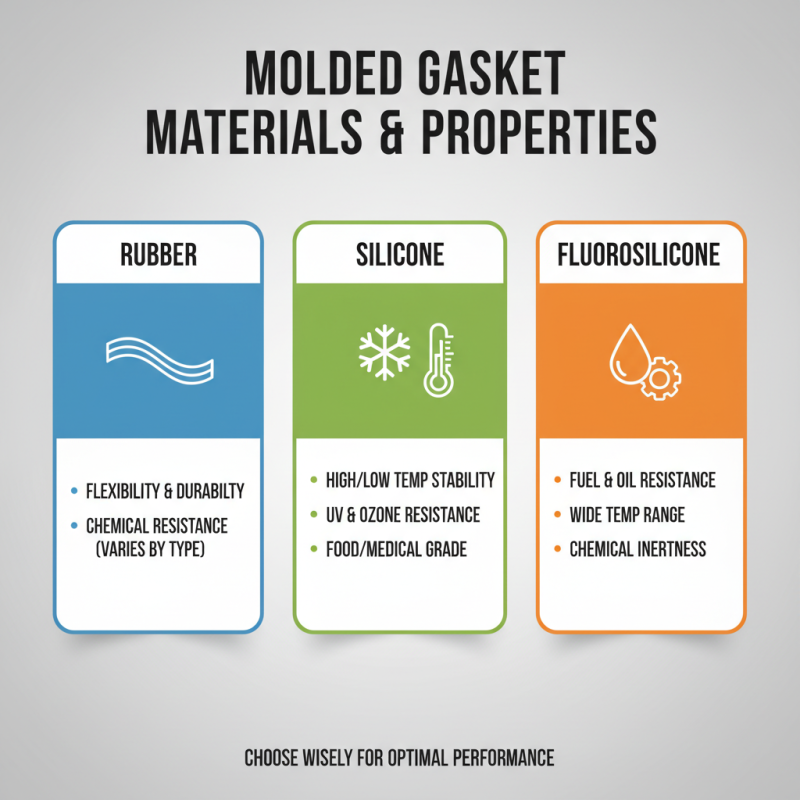
Choosing the right material for molded gaskets is crucial. Various materials offer unique properties suitable for different applications. Rubber, for example, is known for its flexibility and durability. It works well in environments where chemical resistance is required. However, not all rubbers perform equally. The specific type can significantly impact longevity and functionality.
Silicone is another popular choice. It endures extreme temperatures while maintaining its shape. This makes it ideal for both high and low-temperature settings. On the downside, silicone can be more expensive than other options. Evaluating your budget against performance needs is essential.
Additionally, thermoplastic elastomers (TPE) provide incredible versatility. They can combine properties of rubber and plastics near perfectly. However, some TPE variations may not suit highly volatile environments. Understanding each material's limitations helps in making informed decisions. Investing time in research can prevent future issues and unexpected costs.
Identifying the Right Size and Design for Optimal Performance
When selecting molded gaskets, size and design are crucial for performance. A gasket that is too large or small may not seal properly. This can lead to leaks and operational inefficiencies. Take measurements carefully. Even minor discrepancies can impact function.
Consider the environment where the gasket will be used. Temperature, pressure, and exposure to chemicals all play vital roles. Choosing the right material is essential. Some materials resist certain substances better than others. This will ensure longevity. Think about how the gasket interacts with adjacent components. Improper alignment can lead to premature wear or failure.
A few tips can help streamline your selection process. Always check the manufacturer's specifications. Read user reviews. Remember, what works for one application might not work for another. Engage with professionals in the field for insights. Sometimes, getting a sample before finalizing the order assists in making the right decision. Don’t hesitate to ask for expert advice; it can save time and resources.
Evaluating Environmental Conditions Affecting Gasket Longevity and Function
When selecting molded gaskets, understanding environmental conditions is crucial. Temperature, humidity, and exposure to chemicals can greatly impact gasket performance. For instance, extreme temperatures can cause materials to expand or contract, leading to potential leaks. High humidity can result in corrosion or degradation of materials, significantly reducing gasket longevity. Assess these factors to ensure the gasket chosen can withstand the environment it will face.
Consider these essential tips. Identify the temperature range your equipment operates in. Choose materials that perform well in that specific range. Next, evaluate the chemical resistance of potential gaskets. Not all materials respond the same way to various substances. Ensure they won’t degrade over time when in contact with those chemicals.
Also, think about installation conditions. Poor alignment can create pressure points and lead to gasket failure. Regular inspections are necessary to catch issues early. Even slight wear might compromise performance. In the end, understanding these environmental factors will aid in selecting an effective gasket that ensures durability and functionality.
Impact of Environmental Conditions on Gasket Longevity
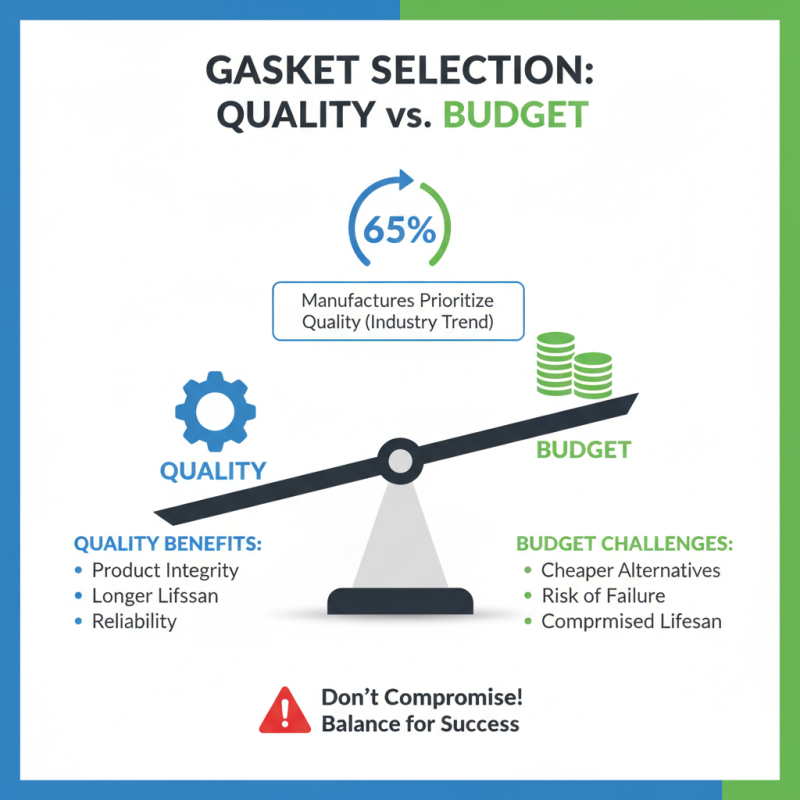
Cost Analysis: Balancing Quality and Budget in Gasket Selection
When selecting molded gaskets, balancing quality and budget is crucial. The gasket industry reports a growing trend: 65% of manufacturers prioritize quality over cost. However, a tight budget can often complicate their decision-making process. Many manufacturers fall into the trap of opting for cheaper alternatives, risking their product's integrity and lifespan.
Quality gaskets may have higher upfront costs but often provide long-term savings. For instance, investing in high-quality materials can reduce leak incidents by up to 40%. This translates to fewer maintenance costs, minimizing downtime. Additionally, quality gaskets typically enhance performance efficiency, which can lead to increased productivity.
Contrary to popular belief, achieving this balance requires careful evaluation. Over 50% of companies report overspending on gaskets due to hasty decisions. It's essential to conduct thorough cost-benefit analyses before making a choice. Sometimes, a slightly more expensive gasket can yield a better return on investment over time. Remember, the cheapest option often leads to quality compromises. Opting for reliability over short-term savings fosters long-lasting partnerships and enhances overall operational efficiency.