Moken (Xiamen) Industrial Co., Ltd.
Leave Your Message

China Top Silicone O Rings Manufacturer Supplier

Silicone O Rings support reliable sealing in food equipment, medical devices, electronics, and light industrial systems. Their clean surface, wide temperature range, and stable compression make them practical for demanding applications. Yet material selection remains critical. Silicone usually performs poorly against abrasive movement, concentrated fuels, and sharp installation damage.

Industry reports show continuing demand. Grand View Research valued the global silicone market at approximately USD 18 billion in 2022. It also projected strong growth through 2030, supported by healthcare, electronics, and automotive applications. MarketsandMarkets has similarly identified sealing products as an important silicone end-use segment. These figures describe the wider silicone market, not Silicone O Rings alone. That distinction matters.

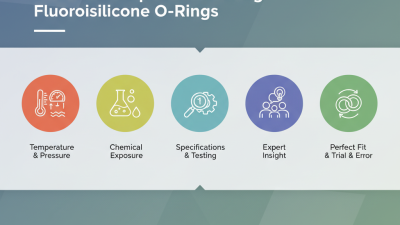
“Seal performance begins with correct material selection, not simply a tight fit,” says sealing specialist Dr. Robert W. Schiller. His view reflects practical engineering experience. Shore hardness, temperature, compression set, media compatibility, and dimensional tolerance must be checked together. A supplier may offer thousands of sizes, yet one unsuitable compound can still fail quickly.

A China-based Silicone O Rings manufacturer should provide traceable compound information, controlled molding, flash inspection, and dimensional testing. ISO 3601 and AS568 references help buyers compare groove and ring dimensions. Batch records add confidence. So does independent testing.

No factory is flawless. Small changes in mold temperature, storage time, or lubricant can affect performance. A dependable supplier admits this risk and improves its process. For buyers, the best partnership combines competitive pricing, responsive engineering, sample validation, and honest technical limits. That is more valuable than a polished catalogue alone.
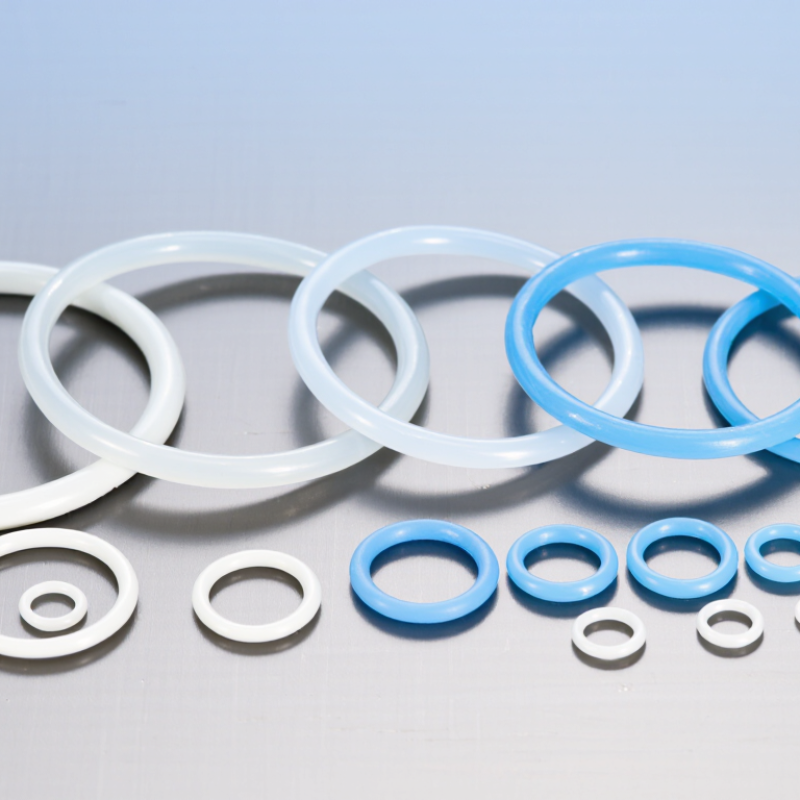
China Top Silicone O Rings Manufacturer Supplier

China Silicone O-Ring Manufacturing: Industry Overview

China’s silicone O-ring manufacturing industry serves medical, food-processing, automotive, electronics, and industrial equipment markets.

Production usually begins with silicone compound selection, based on temperature, flexibility, chemical exposure, and contact requirements.

Standard silicone grades often handle wide temperature ranges, but performance depends on formulation and curing control.

Small differences matter.

Manufacturers commonly use compression molding, transfer molding, or injection molding. Tool design affects flash, surface quality, and dimensional stability.

After molding, post-curing can reduce volatile residues and improve long-term performance. Experienced factories inspect hardness, tensile strength, elongation, compression set, and visual defects. They also check inner diameter, cross-section, and mold alignment with calibrated instruments.

Reliable production needs batch records, material traceability, controlled storage, and clean packaging.

Samples should be tested under realistic temperature and pressure conditions, not only in a laboratory. A supplier may provide attractive samples, yet mass production can reveal uneven curing or inconsistent dimensions.

This remains a practical weakness in the industry.

Careful buyers should review inspection reports, tooling maintenance, sampling methods, and change-control procedures before approval. Clear drawings help. So does honest communication.
Silicone O-Ring Materials, Designs, and Production Methods

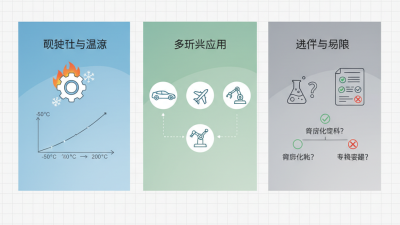
Silicone O-rings combine flexibility, cleanliness, and reliable sealing across many industries. A 2024 global silicone market report forecasts growth above 6% annually through 2030. This demand reflects silicone’s useful temperature range, commonly about -60°C to 200°C. However, temperature alone cannot define suitability. Compression set, media exposure, pressure, and surface finish also matter.

Material selection starts with the silicone grade. Peroxide-cured silicone suits general industrial sealing, while platinum-cured grades support cleaner applications. Fillers can improve strength, but excessive filler may reduce elasticity. Designers should follow ISO 3601 dimensions and verify gland fill carefully. A small squeeze variation can cause leakage. It happens.

Cross-section, hardness, and groove geometry influence sealing performance. Static seals usually tolerate simpler designs than dynamic seals. For production, compression molding remains practical for moderate volumes. Injection molding can improve repeatability and cycle efficiency at higher volumes. Transfer molding offers a useful middle option. Each method still requires controlled temperature, pressure, and curing time.

Post-curing can reduce volatile residues and stabilize performance. Inspection should include flash removal, dimensional checks, hardness testing, and visual examination under suitable lighting. ASTM D2000 provides a useful framework for elastomer classification, but it does not replace application testing. One weakness in many projects is overreliance on catalog data. Real validation should include pressure cycling, thermal aging, and the actual sealing fluid. calc.

Silicone O-Ring Materials: Typical Continuous Service Temperature Limits

This chart compares representative upper continuous-use temperature limits for common elastomer families used in O-rings. Actual performance depends on compound formulation, curing method, seal design, pressure, and the surrounding media.

Production note: Silicone O-rings are commonly manufactured by compression molding, transfer molding, or injection molding. Compression molding is widely used for standard and custom seal designs, while injection molding supports higher-volume production and consistent dimensional control.

Quality Standards and Testing for Silicone O-Rings

A dependable silicone O-ring manufacturer begins with controlled material selection. Silicone compounds should match the intended temperature, pressure, fluid, and exposure conditions. Material identification can follow ASTM D1418, while dimensional requirements often reference ISO 3601. These standards guide production, but they do not replace application-specific testing.

In production inspections, technicians measure inner diameter, cross-section, and flash under controlled lighting. Shore A hardness testing checks whether each batch remains consistent. Tensile strength and elongation testing reveal weak curing or uneven mixing. Compression set testing, commonly performed under ASTM D395, shows whether the seal can recover after prolonged compression. Heat-aging tests also expose changes after extended temperature exposure.

Small defects matter.

A practical quality program includes visual inspection, sampling plans, and documented batch records. Test temperatures, curing times, equipment calibration, and operator observations should remain traceable. Leakage testing under actual assembly conditions provides useful evidence, especially when surface finish or groove design affects sealing. In my experience, laboratory results can look acceptable while installation still fails. Excessive stretching, sharp grooves, or contamination may cause that gap. Silicone O-rings are not automatically suitable for every fluid or pressure range. A careful supplier should review drawings, operating data, and test results before approving production. Some inspections remain imperfect, so repeated testing and honest reporting are necessary.

How to Evaluate a Chinese Silicone O-Ring Supplier

How to Evaluate a Chinese Silicone O-Ring Supplier

The silicone market is expanding quickly. Grand View Research estimates a USD 20.5 billion market in 2023, with a 6.7% CAGR through 2030. This growth attracts capable factories and careless traders. Check the actual production site. Confirm mixing, molding, post-curing, inspection, and warehouse controls. A polished website proves little.

Ask for silicone grade, hardness range, cure system, and temperature limits. Request batch records and a certificate of analysis for every shipment. The material should match ASTM D1418 classification and the dimensions should follow ISO 3601 or the agreed drawing. Inspect samples with a calibrated vision system or optical comparator. Test hardness, tensile strength, elongation, compression set, and dimensional stability. MarketsandMarkets reports that the global seals and gaskets market may reach about USD 99 billion by 2028. That scale makes supplier discipline more important, not less. Ask how rejected parts are isolated. Ask again.

Review the supplier’s mold maintenance logs and traceability codes. A serious manufacturer can link one O-ring to its compound batch, mold cavity, operator, and inspection report. Request a small pilot order before annual pricing. Measure the parts after storage and after temperature exposure. I once treated a clean sample as enough evidence; that was a weak decision. Silicone can pass visual inspection yet fail compression recovery. Packaging matters too. Each bag should show size, compound, hardness, lot number, quantity, and production date. Be cautious when testing data lacks test conditions or signed approval.

Applications, Customization, and Export Services

Silicone O rings are widely used in food-processing equipment, medical devices, pumps, valves, and sealing systems. Their flexibility supports reliable sealing across changing temperatures. We inspect each order according to pressure, temperature, media, and installation conditions. Small details matter.

Customization begins with the application. We can adjust inner diameter, cross-section, hardness, color, and compound selection. High-temperature equipment may require heat-resistant silicone. Outdoor systems may need stronger resistance to ozone and aging. A drawing helps, but real operating data is better. A perfect specification on paper can still fail during assembly. We have seen grooves that looked correct but compressed the ring unevenly. That lesson stays with us.

Export service requires more than packing products into cartons. We prepare dimensional records, material information, inspection reports, and practical packaging plans. Samples can support testing before larger production. Production tracking also helps buyers manage schedules across borders. We check labeling, quantities, and carton protection before shipment. Mistakes still deserve attention. A delayed sample or unclear drawing can affect an entire project. Clear communication reduces that risk. With technical review, controlled production, and responsive export support, buyers can select silicone O rings with greater confidence.

China Top Silicone O Rings Manufacturer Supplier - Applications, Customization, and Export Services

Technical overview of silicone O-rings, common applications, customization options, quality considerations, and international supply services

Data Dimension Key Specification Typical Options or Range Application and Service Notes
Base Material Silicone rubber VMQ or PVMQ silicone compounds Suitable for applications requiring flexibility, low-temperature performance, and resistance to weathering, ozone, and aging.
Common Temperature Range Service temperature Approximately -60°C to +200°C, depending on compound and operating conditions The actual range depends on compression, pressure, media, exposure time, and the selected silicone formulation.
Hardness Shore A hardness Typically 30–90 Shore A Lower hardness improves conformity on some low-pressure sealing surfaces; higher hardness can improve extrusion resistance.
Cross-Section Circular seal profile Metric and inch cross-sections; standard and non-standard sizes Selection should consider groove dimensions, squeeze, stretch, pressure, and installation method.
Color Options Visual identification Translucent, white, black, red, blue, green, and other matched colors Color can support product identification, but it does not by itself confirm chemical resistance or compliance.
Chemical Compatibility Media resistance Generally suitable for water, air, ozone, and some dilute chemicals Silicone is not universally resistant; compatibility should be verified for fuels, mineral oils, concentrated acids, and solvents.
Electrical Properties Insulation performance Good electrical insulation in suitable dry and controlled environments Used for sealing and insulation where flexibility and temperature stability are required.
Food and Medical Use Special-grade silicone Food-contact, medical, or biocompatible grades when specified and validated Material declarations, traceability, testing, and applicable regulatory documentation should be requested for regulated products.
Industrial Applications Equipment sealing Pumps, valves, pneumatic systems, instrumentation, and general machinery Commonly selected for static sealing and moderate-duty applications with suitable temperature and media conditions.
Automotive and Mobility Vehicle components Sensors, lighting assemblies, connectors, cooling systems, and selected fluid-control components Material selection must account for vibration, thermal cycling, fluids, compression set, and service life.
Electronics and Appliances Enclosure and component sealing Water-resistant housings, cable interfaces, switches, and small appliances Custom colors and softer compounds can support assembly and visual inspection requirements.
Customization Product design options Dimensions, hardness, color, compound, surface finish, packaging, and inspection criteria A technical drawing, sample, groove data, operating conditions, and annual volume help define a suitable design.
Manufacturing Processes Molding and finishing Compression molding, transfer molding, liquid silicone molding, trimming, and post-curing Process selection depends on geometry, tolerance, production quantity, surface requirements, and material grade.
Quality Inspection Dimensional and material checks Visual inspection, dimensional measurement, hardness testing, tensile testing, elongation, and compression-set testing Inspection plans can be aligned with customer drawings, sampling requirements, and applicable O-ring standards.
Relevant Standards Size and quality references ISO 3601, AS568, DIN 3771, and customer-specific specifications where applicable The required standard should be confirmed before tooling, production, inspection, and packaging are finalized.
Packaging Protection and identification Bulk bags, sealed bags, compartment boxes, labeled cartons, and palletized export packing Packaging can include part number, size, material, batch number, quantity, production date, and storage guidance.
Export Documentation International shipment support Commercial invoice, packing list, certificate of origin, bill of lading, and compliance documents when required Document requirements vary by destination, customs classification, buyer terms, and product application.
Storage Guidance Shelf-life protection Store in a cool, dry, dark location away from ozone-generating equipment, direct sunlight, and excessive heat Keep seals in their original packaging where possible and avoid folding, stretching, or hanging during storage.
Ordering Information Technical inquiry data Size or drawing, material, hardness, color, quantity, application, operating temperature, pressure, and media Providing complete technical information helps reduce sampling time and improves material and dimensional selection.